Operation Guide: Steps to Take After a Solar Panel Cracks or Shatters
Hazardous Situations
Solar panel explosions (typically referring to glass breakage or severe internal damage to the module) are safety incidents that require extremely cautious handling.
4 Major Hazardous Situations:
- Electrical Hazard: Even when damaged, photovoltaic modules may still generate lethal direct current high voltage.
- Cutting Hazard: The edges of broken glass are extremely sharp and can easily cause cuts.
- Chemical Hazard: Exposed chemical materials inside damaged modules can pose chemical hazards.
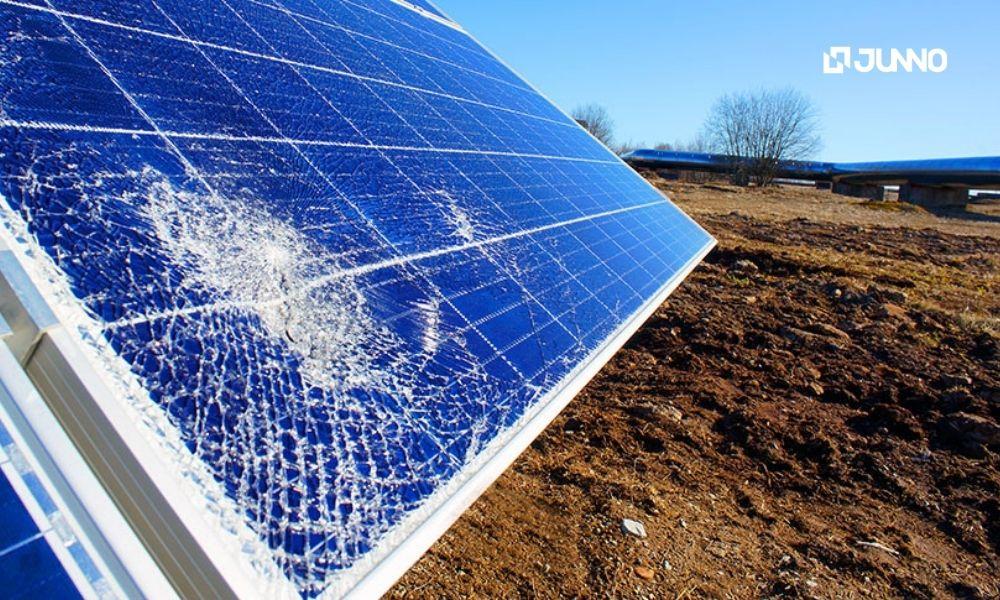
- Short Circuit Hazard: Cracked modules may expose internal circuits to moisture, potentially causing short circuits, arcs, or even fires.
Response Steps
- Safety Isolation: Upon discovering a ruptured component, immediately isolate it and post warning signs. Avoid contact with debris or electrical shock.
- Proper Power Disconnection: Implement insulation measures and immediately disconnect the DC wiring of the ruptured component.
- Report the Fault: Document the incident in detail (location, time, damage status, etc.) and report the fault, arranging for repairs.
- Clean Up the Site: When cleaning up, always wear long-sleeved work clothing and thick insulated gloves. Do not dispose of component fragments carelessly.
- Replace the Component: Use the original model of solar panel to avoid incompatible installations.
Preventive Measures
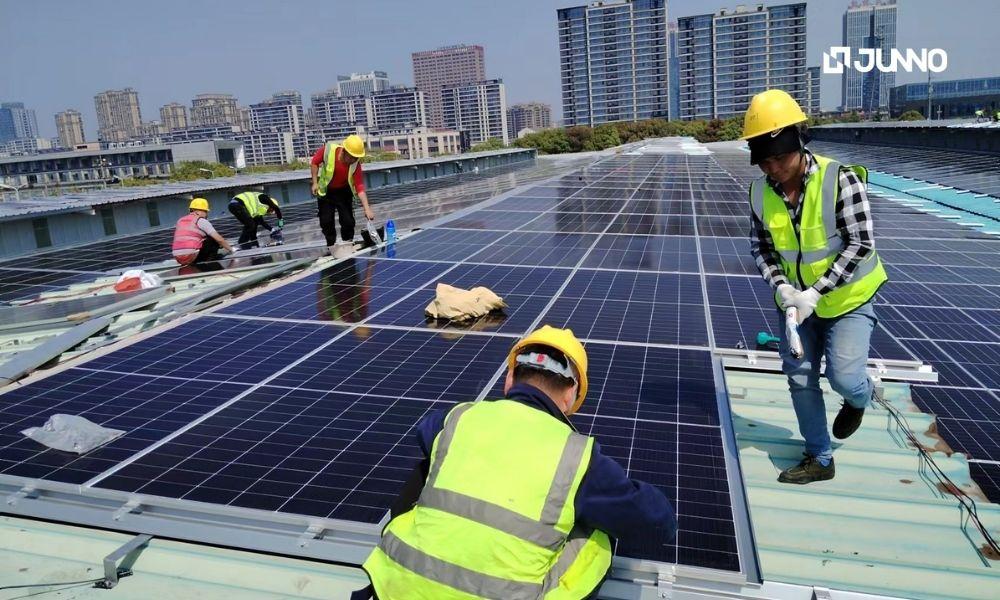
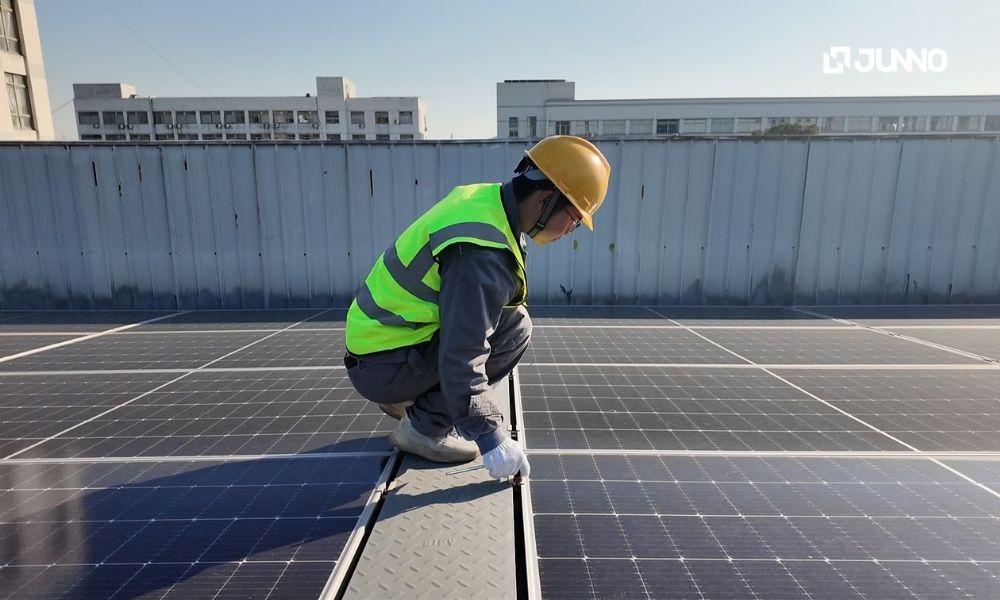
- Regular professional inspections: Hire professionals to regularly inspect components for hidden cracks, hot spots, glass damage, and other issues.
- Avoid external impact: Prevent hail, falling objects, trampling, and other factors from causing mechanical damage to components.
- Proper installation and maintenance: Ensure that components are securely installed, wiring is standardized, and components are cleaned regularly (avoid using hard objects or high-pressure water jets).
- Install a monitoring system: System monitoring can promptly detect abnormal power generation in string arrays (such as sudden power drops) and alert you to component faults.
Key Takeaways
Safety first! Stay away from damaged components, and do not attempt to repair them yourself.
Power must be disconnected! A licensed electrician must strictly follow the procedures to disconnect the AC and DC power sources and fully discharge the system.
Professional assistance is required! Contact a qualified installer or maintenance company for on-site assessment, power disconnection confirmation, component removal, and system repair.
Proper disposal! Damaged components are electronic waste and must be handled by a professional recycling facility.
Recent Posts
Unlocking the Full Lifecycle of a Solar Farm
Philippines PV-ESS Market Analysis
The successful installation of a 50MW/100MWh energy storage system in Zhuji, Zhejiang
How to Eliminate Fire Hazards in Solar Farm?
Indonesia Investment Guide: Solar Plants & Factories
New energy drives China to usher in new GDP "trillion cities"
Is east-west direction better for solar systems?
How to Improve the Power Generation of a Solar Farm?
Contact Us