Africa Solar Market Analysis
Market Dynamics
In 2025, the African solar market reached a new peak, with approximately 4.5GW of new photovoltaic capacity installed throughout the year, a substantial increase of 54% compared to the previous year. It is projected that by 2029, annual new solar installations in Africa could reach 31.5GW. Notably, growth in the African solar market is spreading from a few leading nations to a wider area. In 2025, nearly 10 African countries each installed over 100 MW of new capacity, a trend that significantly enhances the overall resilience and vitality of the continent's solar market.
Key Markets
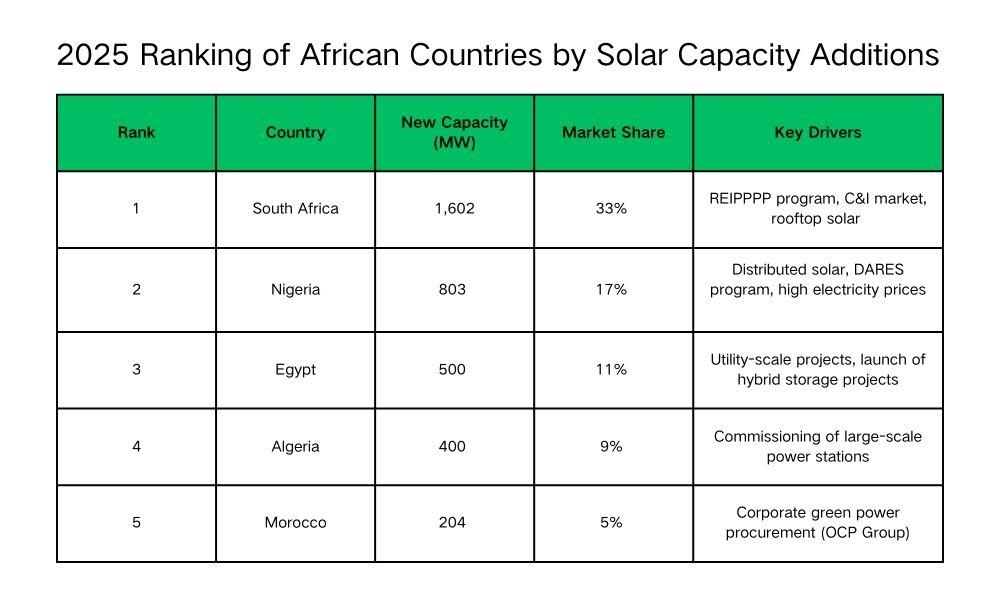
South Africa: Africa's largest solar market, with 1.6 GW of new installed capacity by 2025, accounting for 33% of the entire African photovoltaic market. This achievement is mainly due to the booming development of distributed solar power.
Nigeria: Africa's fastest-growing solar market, with new installed capacity surging 141% year-on-year to 803 MW, making it the second-largest solar market in Africa. Its growth is mainly fueled by the rapid expansion of distributed solar and the government's DARES program.
North Africa: Egypt and Algeria followed closely with 500MW and 400MW respectively, with growth primarily coming from the steady progress of large-scale power plant projects.
Driving Factors
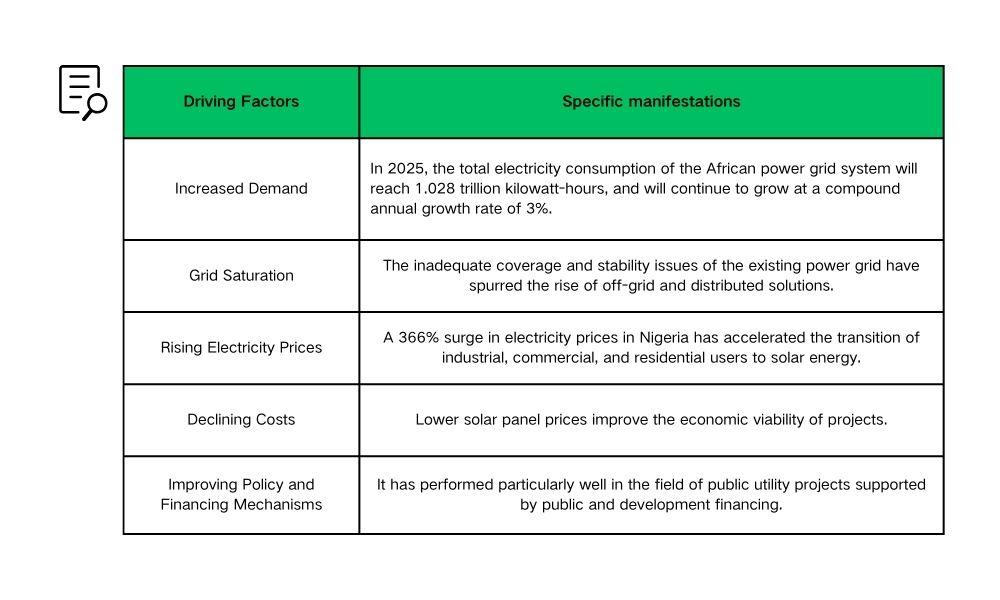
Increased Demand: In 2025, the total electricity consumption of the African power grid system will reach 1.028 trillion kilowatt-hours, and will continue to grow at a compound annual growth rate of 3%.
Grid Saturation: The inadequate coverage and stability issues of the existing power grid have spurred the rise of off-grid and distributed solutions.
Rising Electricity Prices: A 366% surge in electricity prices in Nigeria has accelerated the transition of industrial, commercial, and residential users to solar energy.
Declining Costs: Lower solar panel prices improve the economic viability of projects.
Improving Policy and Financing Mechanisms: It has performed particularly well in the field of public utility projects supported by public and development financing.
Investment Outlook
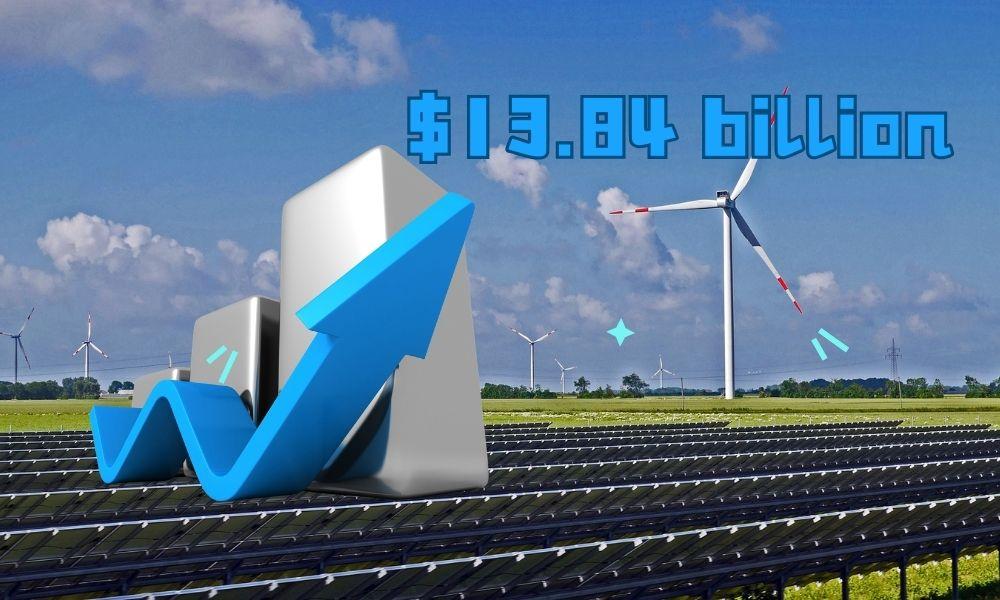
In 2025, total investment in Africa's energy transition sector reached $13.84 billion, with clean energy projects accounting for over 98% of this amount. In terms of financing structure, debt financing was the primary source of funds. The African Development Bank, the World Bank, and Standard Bank were the main investors during the year.
In addition, the upcoming Africa Green Economy Summit, which opens on February 24, is expected to showcase a range of green projects seeking $3.09 billion in investment, offering investors a wealth of opportunities.
Future Trends
Energy Storage Integration: Energy storage is increasingly becoming a standard feature in new projects to address nighttime power supply issues. South Africa has launched the Battery Storage Independent Power Producer Procurement Scheme (BESS IPPP) and simplified the approval process for grid connection of energy storage.
Domestic manufacturing capabilities are being enhanced, with Egypt set to achieve mass production of components by Q1 2026. Eighty percent of the project's components will be locally manufactured.
Distributed solar systems continued to expand, accounting for approximately 44% of new capacity, nearly on par with large-scale power plants.
Microgrids and Virtual Power Plant Models: In 2024, Africa's off-grid solar market attracted $299 million in investment across 158 global transactions.
Green Hydrogen Pilot Project: The South African government is vigorously advancing a private “desert-to-port” green hydrogen corridor with a total investment of $150 billion, focusing on hydrogen energy and e-fuels.
Conclusion
Africa possesses the world's richest solar resources, has achieved the lowest global levelized cost of solar electricity (LCOE), and demonstrated exponential market growth in the past year of 2025. It is forging a new development logic: "electricity access first, industry follows, then growth ensues." Evolving from the "Desert Kingdom" to a "Sun Nation," Africa is writing a new chapter in the global energy transition.